
The THOM BROWNE Wave Pattern Crew Neck T-Shirts listing is aimed at shoppers who want a gray, slim-fitting short-sleeve top with a textured finish. Because this is a UA reps product rather than an authentic retail pair, the useful buying questions are practical: what material and construction details are listed, how should the numbered sizing be approached, and what should you inspect when the shirt arrives?
This guide stays close to the information available on the THOM BROWNE Wave Pattern Crew Neck T-Shirts product page. It does not assume unlisted measurements or promise an exact retail match.
What the product listing specifies
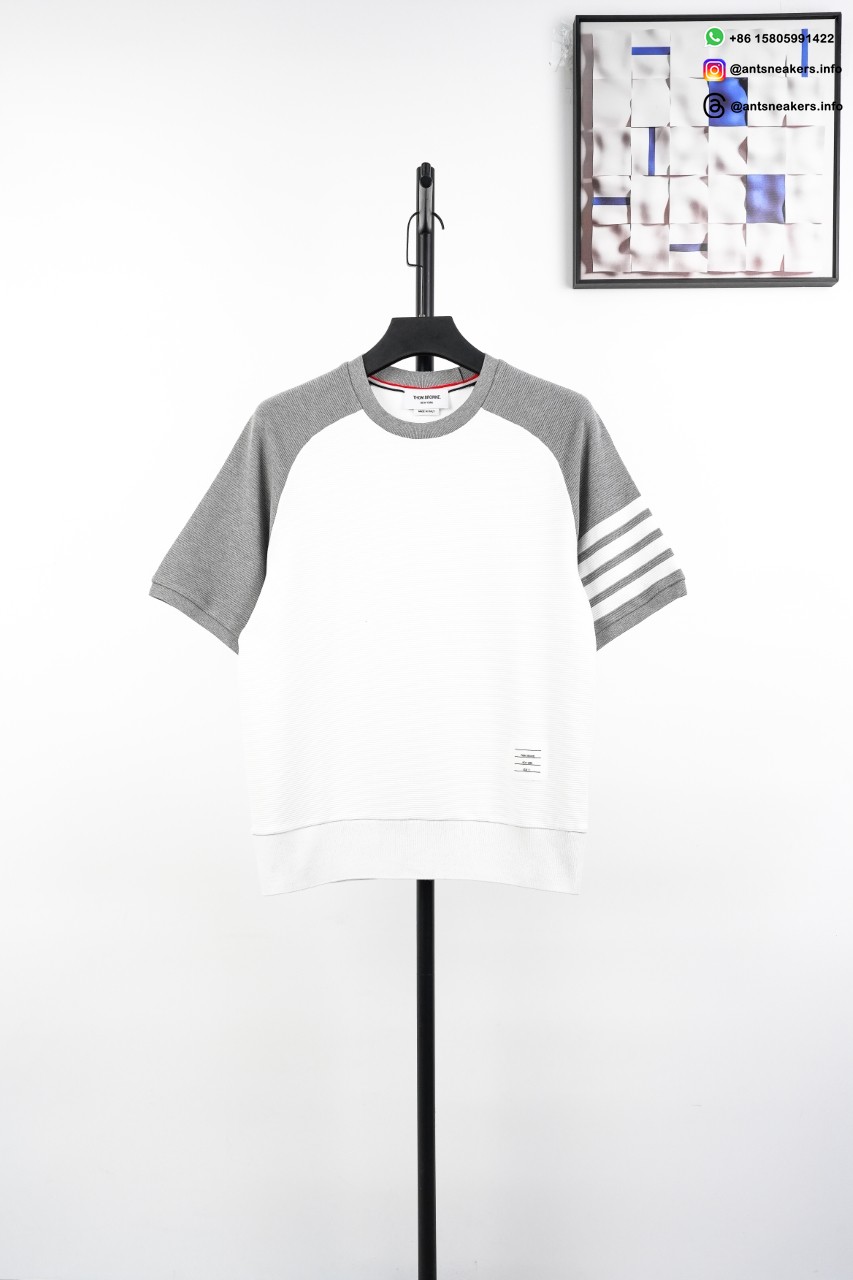
The page lists a gray color, a slim fit, and sizes 1 through 4. The material description identifies cotton yarn, a staircase-style woven texture, a plain hem, and breathable fabric. It also calls out red, white, and blue webbing at the back collar and describes elastic thread intended to recover after washing.
Those details give you a focused inspection list. Look at the surface texture in the product photos, check how the crew neck sits, and compare the collar trim and back detail across the available images. A textured knit can look different under flat studio light and natural light, so use the gallery to judge the overall structure rather than relying on one close-up.
How to approach sizes 1–4
The available options use numbered sizes instead of standard S, M, L, and XL labels. The listing also describes the cut as slim. That combination makes guessing from your usual letter size risky. Before ordering, compare a shirt you already own with the seller’s current garment measurements, especially chest width, shoulder width, body length, and sleeve length.
Measure the comparison shirt flat without stretching it. Take the chest width from armpit to armpit, the shoulder width across the back, and the body length from the high shoulder point to the hem. If your preferred shirt already fits close to the body, leave enough room for normal movement rather than choosing a smaller number just to create a sharper silhouette.
If measurements are not shown for every numbered option, ask for the current chart before checkout. Product batches and measurement methods can vary, so a fresh chart is more useful than a generic conversion table. Allow for a small manual-measurement difference and decide which dimension matters most for you: shoulder placement, chest room, or body length.
Quality checks that matter on arrival
Start with the neckline. It should lie evenly without obvious twisting or puckering. Then inspect the shoulder seams and side seams to see whether they track straight when the shirt is laid flat. Check the wave-like surface texture for large inconsistent areas, and examine the plain hem for skipped stitches or loose thread ends.
At the back collar, inspect the red, white, and blue webbing for clean attachment and even alignment. The listing highlights this detail, so it deserves more attention than packaging or removable tags. Also compare the garment you receive with the listing photos for color, sleeve shape, and overall proportions.
Finally, check the inside seams and gently test the fabric’s recovery by handling it normally rather than pulling hard. The product description mentions elastic recovery after washing, but long-term performance cannot be confirmed from a new garment. Following the garment care label and avoiding excessive heat is the cautious approach for a cotton, textured top.
A practical buying checklist
- Confirm that gray is the color you want and review the full image gallery.
- Request the current measurements for sizes 1–4.
- Compare chest, shoulder, length, and sleeve measurements with a shirt you own.
- Account for the listed slim fit instead of relying on a usual letter size.
- On arrival, inspect the neckline, texture, seams, hem, and back-collar webbing.
- Use the care label rather than assuming a wash method.
The strongest reason to consider this piece is its specific combination of a gray palette, slim cut, textured cotton construction, and back-collar trim. The safest purchase decision comes from verifying the numbered measurements and evaluating those visible construction details—not from treating UA reps as authentic retail products.