
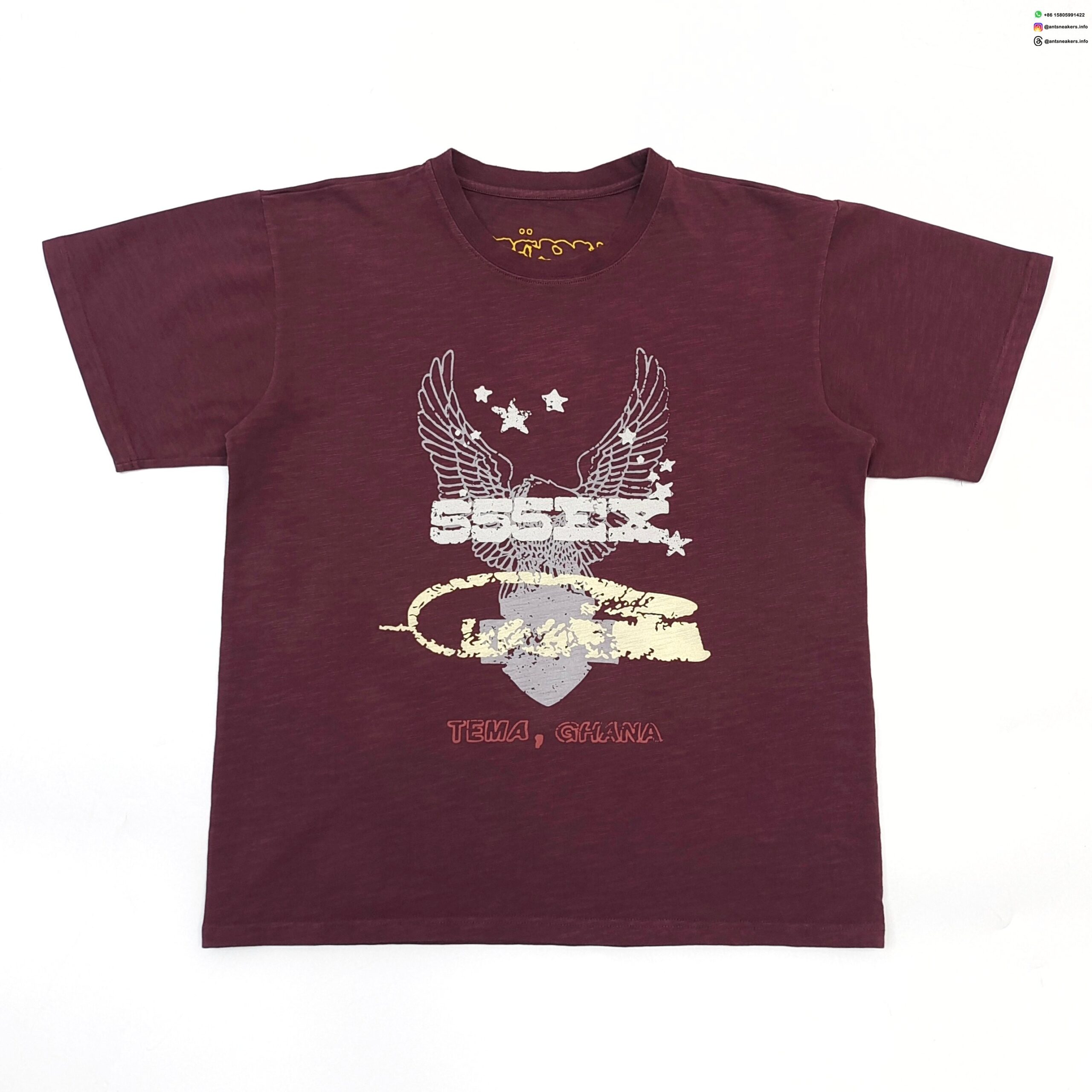
Choosing the Sp5der Heavy Bamboo 555EX Bean Paste Color Tee can be reduced to a short evidence-based workflow. First verify the exact product record. Then examine the displayed tone and artwork using fixed points on the garment. Finally, translate the seller’s size information into measurements from a T-shirt you already own. The goal is not to score the product or predict how every unit will fit; it is to turn the listing into a useful decision checklist.
Step 1: lock the comparison to SKU sp5dertee20250910002
Start with the product identity rather than a broad Sp5der search. The page names the piece as the Heavy Bamboo 555EX Bean Paste Color Tee and identifies it with SKU sp5dertee20250910002. Keep that record open while inspecting photos or asking questions. Another graphic tee may use a different color, placement, cut, or product code, making its imagery a poor substitute for this listing.
Save the product name, SKU, selected size, and the page URL with your order notes. This creates a simple reference if you need to confirm which option you selected. It also reduces the risk of making a decision from a reposted image that is no longer tied to the current product page.
Step 2: test the displayed tone against your wardrobe
Color names are useful identifiers, but they are not precise screen-calibration standards. Display brightness, white balance, room lighting, and image processing can all affect how a muted tone appears. Review every available image on the listing and look for views taken under different lighting. Instead of trying to assign an exact shade from one photo, decide whether the overall warm, muted direction shown on the page works with the trousers, denim, outerwear, or footwear you plan to pair with it.
If the precise tone is important, ask whether a current photo can be provided under neutral light. A side-by-side image with a familiar neutral object may be more useful than a color adjective alone. Treat any extra photo as another visual reference, not a guarantee that every screen will display the color identically.
Step 3: map the artwork to garment landmarks
A graphic tee is easiest to assess when you compare the print with stable garment landmarks. On the front view, note the distance from the neckline to the top of the artwork, the space between the graphic and each side seam, and how the design sits relative to the chest and hem. If the listing includes a back view, repeat the same check there. This method is more informative than judging whether the artwork merely “looks centered.”
Zoom in only as far as the source image remains clear. Look at the visible edges of the artwork and the way it follows the garment while laid flat or displayed. Photography can introduce folds and perspective, so do not use a diagonal crease as evidence that the print itself is misaligned. When placement is a deciding factor, request a current straight-on image of the available piece.
Step 4: read the silhouette from visible edges
Review the neckline shape, shoulder line, sleeve openings, side-to-side balance, and bottom hem. These points help you understand the displayed silhouette. Compare the left and right sides while allowing for normal folds or camera angle. If close-up images are available, inspect the visible transitions around the collar and the edges of the graphic, but avoid drawing conclusions about unseen areas.
The words in a product title should not replace observable information. If fabric composition, garment weight, washing instructions, or construction method matters to your purchase, use the details explicitly stated on the current listing or ask the seller to clarify them. Do not infer those specifications solely from the phrase “Heavy Bamboo” in the product name.
Step 5: create a flat-measurement reference
Choose a T-shirt that already has the shoulder position, body width, sleeve shape, and length you want. Lay it flat on a level surface without stretching it. Record the measurements in the same unit used by the seller:
- chest width from pit to pit;
- shoulder width between the relevant seam points;
- back length from the collar area to the bottom hem;
- sleeve length using a clearly defined start point;
- sleeve-opening width; and
- bottom-hem width.
Then compare those numbers with the listing’s garment chart, if provided. Confirm whether the seller measures the garment flat and whether the width shown is a half-chest measurement or a full circumference. Ask what measurement tolerance applies. A small difference in chest width affects the full body circumference, while differences in length or shoulder width change the silhouette in another way.
Step 6: rank the dimensions that shape your fit
Do not choose a size by trying to make every number identical to your reference shirt. First decide what you want to preserve. If you like the reference tee’s relaxed body but want a shorter finish, chest width and total length deserve separate attention. If sleeve position defines the look for you, compare shoulder width and sleeve length together.
Also avoid assuming that moving one size up or down changes only the chest. Grading can alter width, length, shoulders, and sleeves at the same time. If you fall between options, ask for the actual measurements of the available size rather than relying on a universal “size up” or “size down” rule.
Questions to resolve before checkout
- Is the selected product the Heavy Bamboo 555EX Bean Paste Color Tee with SKU sp5dertee20250910002?
- Are the current item photos consistent with the color and graphic placement shown on the listing?
- How were chest, shoulder, length, and sleeve measurements taken?
- Are the chart values garment measurements or recommended body measurements?
- What measurement tolerance should be expected?
- What are the current care, return, and exchange terms for this item?
The final decision rule
Proceed only when the SKU, visible design, and key measurements all point to the item and silhouette you intended to select. If one of those inputs is missing, ask for clarification instead of filling the gap with a generic sizing rule. This keeps the decision anchored to the Sp5der 555EX Bean Paste listing and separates observable information from assumptions.
Related Antsneakers Products to Compare
- Sp5der Black 555 Graphic Tee | 240g Premium Cotton T-Shirt | Streetwear Essentials 2025 (sp5der20251028005)
- Sp5der Back 23 White Graphic Tee – Premium Cotton Streetwear T-Shirt (sp5der20251124009)
- Sp5der Black Rhinestone Graphic Tee – Premium Cotton Streetwear T-Shirt (sp5der20251124010)